

Can you rent a camper for a kitesurfing trip?
Yes. We rent 4WD campers that carry kitesurfing gear, and several record kiteboard storage. Depending on the model, boards go on a roof rack or in a storage space, with the kite bags packed inside. See the campers with kiteboard storage, then send us what you are bringing: we check that it fits the camper you choose before you book.
What makes a camper good for kitesurfing
Not every camper suits a kite trip. These are the things we look at with you:
- Board storage that takes your longest board, so it does not share the bed or the back seat.
- Four-wheel drive with low range, for the soft sand on tracks to beaches and launch sites.
- An air compressor and recovery boards, so you can let your tires down for sand and pump them back up before the highway.
Can you drive the camper on the beach?
It depends on the camper and the stretch of sand. The hire conditions set where a camper may go, and some beaches and tracks also need a permit or a park pass. Tell us the beaches and tracks you plan to use, and we check them against the hire conditions of your camper before you book. On sand, keep four-wheel drive engaged and let your tires down.
What to send us before you book
Send us the length of your longest board, the size of your packed kite bags, any foil parts and how many people are traveling. Remember the luggage, food and camping gear that has to fit as well. If your boards need a roof carrier, we check that one is allowed on that camper.
Sea breeze and daily forecasts
From November to March, Perth’s afternoon sea breeze, the Fremantle Doctor, blows on most days. It usually picks up after midday and is strongest in the late afternoon, so you can sightsee in the morning and ride after lunch. It depends on the wider weather, so allow spare days. Further north, check the BOM marine forecast, tide and launch conditions for each stop.
Choosing a launch site
Up the coast, Lancelin and Geraldton range from flat water to waves, and further north Gnaraloo can only be reached by 4WD. Match each spot to your ability and that day’s conditions.
Kite and Wing WA’s location guidance describes gusts at Melville, recommends that beginners who cannot ride upwind avoid The Pond at Safety Bay, and identifies cross-offshore wind at Woodman Point Beach Three. Reef, swell, other water users and safe landing space all affect suitability.
Check the location guide, signs and approved launch zones for your chosen spot. Local advice is useful for unfamiliar reefs, wind directions and landing areas.
Check the marine rules for your session
Transport WA says kiteboarders are subject to marine rules including collision avoidance and safe speed. Additional safety-equipment requirements apply beyond 400 meters offshore. Check its current equipment table and permitted alternatives for the activity and distance you intend to ride.
Campsites along the coast
Book designated campsites within reach of your preferred riding spots. Keep some rest days for sightseeing or a longer stay when conditions are good. Check camping rules before planning to stay near a launch site.
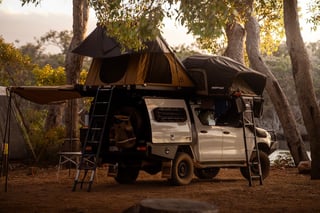 Discoverer 4 berth
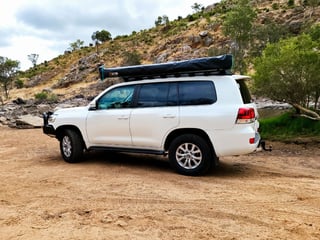 Landcruiser 6 seats
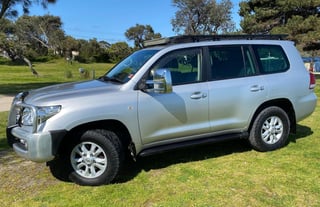 Landcruiser 8 seats with swags
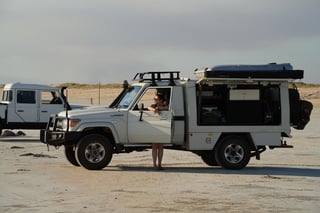 Landcruiser Canopy
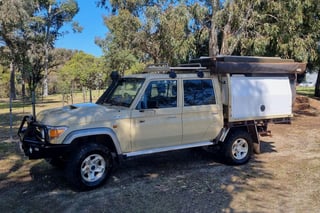 Landcruiser V8 with electric roof tent
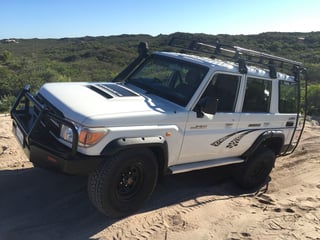 Landcruiser Vortex
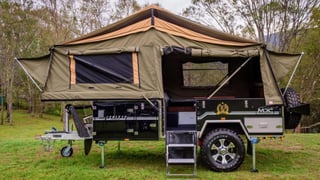 4WD car and off road camper trailer 4 berth
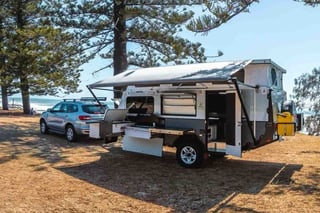 4WD car and off road caravan 5 berth
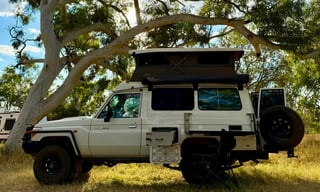 Pop-up Bushcamper with slide-out kitchen
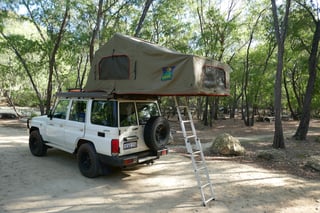 Toyota Landcruiser with large roof tent
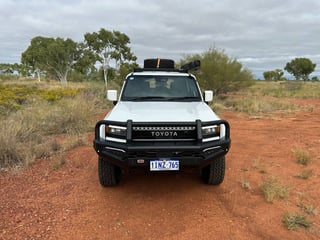 Toyota Prado